Posts

A Crisis of Construction

Image
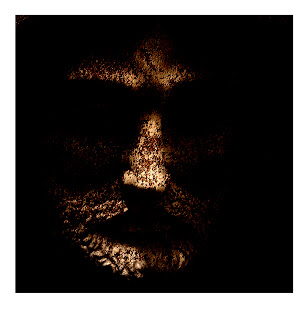
Shadow Self (c) D Harris T hat we construct our own reality is a fiction. To construct reality, we would have to be apart from it, outside of it, in order to construct it. This is absurd. Yet this is the state of a lot of contemporary art and contemporary art photography. It is a double fiction, because its sincere belief that we construct our own reality has become a 'reality' in itself. It is like the old saying, "tell a lie long and often enough, it becomes a truth." We could argue that, like novelists, we dream up characters that have believability and that these characters interact in real-life plots, and that this can reveal truths about ourselves and our world. Yes it can. It is still fiction if the photographer’s own truths are not expressed. A contemporary course curriculum for art photography states: "Consistency adds believability to your work and persuades your audience to suspend its disbelief." Two critical questions immediately arise: ...

The Art of Emptiness

Image
Interior Landscape #2 (c) D Harris Is this image that of a flat piece of land set against a blue sky, or is it a table top against a wall? Our perception may allow us to recognise it as both. We are programmed to perceive what we expect to see. Sometimes, what we are looking at may not be what we perceive it to be. Which one is true? It depends on your perception. Our logical minds cannot process a “both-and” scenario and dictate that it must be “either/or”. However, truth is linked to perception and perception makes truth relative to the individual. This naturally leads to an experiential point of view, for what I have I experienced, I can ‘know’, in the felt sense, and what I have not experienced, I do not know. I may claim to know, but that is mere conception. In Zen, emptiness is a particularly challenging barrier on the path to ultimate awareness. It is a great test because the barrier is an illusion itself, set up by the conceptual mind, but perceived as real. There i...

Black Is Black

Image
(untitled) (c) D Harris 2011 B uddhist thought and its central preoccupation with the concept of impermanence also leads it to delve into the realms of perception itself. The "appearance" of the world as fixed and permanent on a macro level is seen as a concept of mind, conditioned by time and space. "This floating world", a common Zen expression, encapsulates this idea. Buddhist thought influenced the Indian concept of "non-duality" or Advaita Vedanta . One of the main postulates of this idea is that when the 'I' that arises from deep, dreamless sleep arises, the phenomenal world arises, and when the 'I' ceases during deep, dreamless sleep, the phenomenal world ceases. In deep dreamless sleep, who exists? What is this 'I'? Our perception is therefore conditioned by appearances, and appearances are conditioned by time, space, and hence perspective. Is a rock alive? From the atomic perspective, we could say yes, bec...

Impermanence as a world view

Image
(untitled) (c) D Harris                                                                       I mpermanence as a world view is either denied or frightening to most people.   As a core concept of Buddhist thought, it posits that every manifest thing is in a process of change, and that nothing in and of itself, is enduring. Everything that is compound, arises from conditions, continues for a duration, declines and ultimately disperses.   All conditioned things depend on other causes and conditions for their arising, duration and cessation. Part of this view originates from observing nature. The implication naturally is that if all things are impermanent, then the self must be impermanent too. Thoughts in the mind, which give rise to the sense of self, the “I”, arise, continue for a duration, subside ...